
The Construction ofthe R51
Rockport Marine’s 51′ lobster yacht is in build – see below for the story and photos.
Designed and built by Rockport Marine, the R51 is a modern interpretation of the classic Downeast lobster yacht. Rockport Marine President Sam Temple has been a student of the type, keeping a working lobster boat as a family weekender. Lead designer Sam Chamberlin helped the Smithsonian Archive computer model their measurement data of historically significant lobster boats so that they could develop useful design and line plans for their research. The combination of their experiences is reflected in the R51’s combination of traditional character and data-driven design. Her hard chine, semi-built-down bottom, and pronounced topside flare give the yacht a distinctive profile while supporting sea kindliness, maneuverability, and efficient cruising.
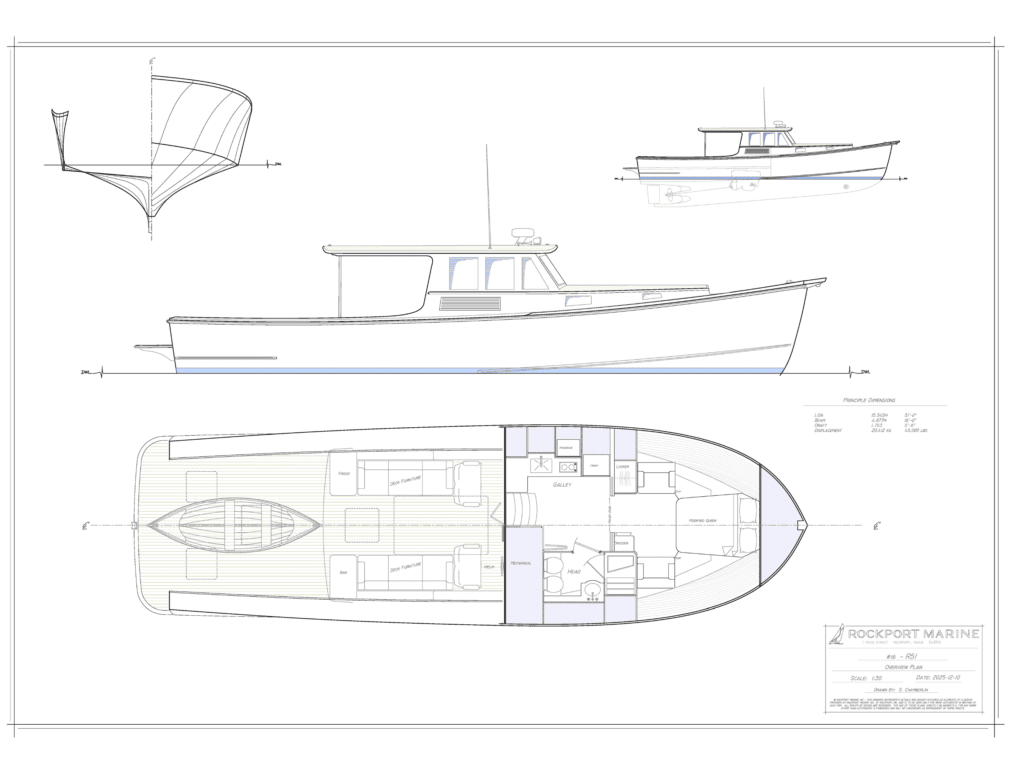
The design team used a computational fluid dynamics program to study the spray rails and added topside flare, with the goal of creating a drier ride. Sound attenuation is also a priority: Rockport Marine is working with an outside consultant to minimize noise underway, and the advantage of the hull’s larger size is that it allows the engine to sit fully below the sole. A Seakeeper will provide additional stabilization.
Inside, Herreshoff-style trim will be paired with comprehensive cruising accommodations, a spacious galley, and a generous picnic area behind the helm for entertaining. An open transom, flip-down bronze swim ladder, and deck-mounted roller will simplify boarding and launching the rowing dinghy carried aft.
Taking Shape
The R51 is being constructed using Rockport Marine’s specialty: cold-molded wood-composite construction, creating a strong, balanced structure that is lighter and thinner than traditional wood construction alone would allow, while retaining the warmth, sound, and feel of wood.
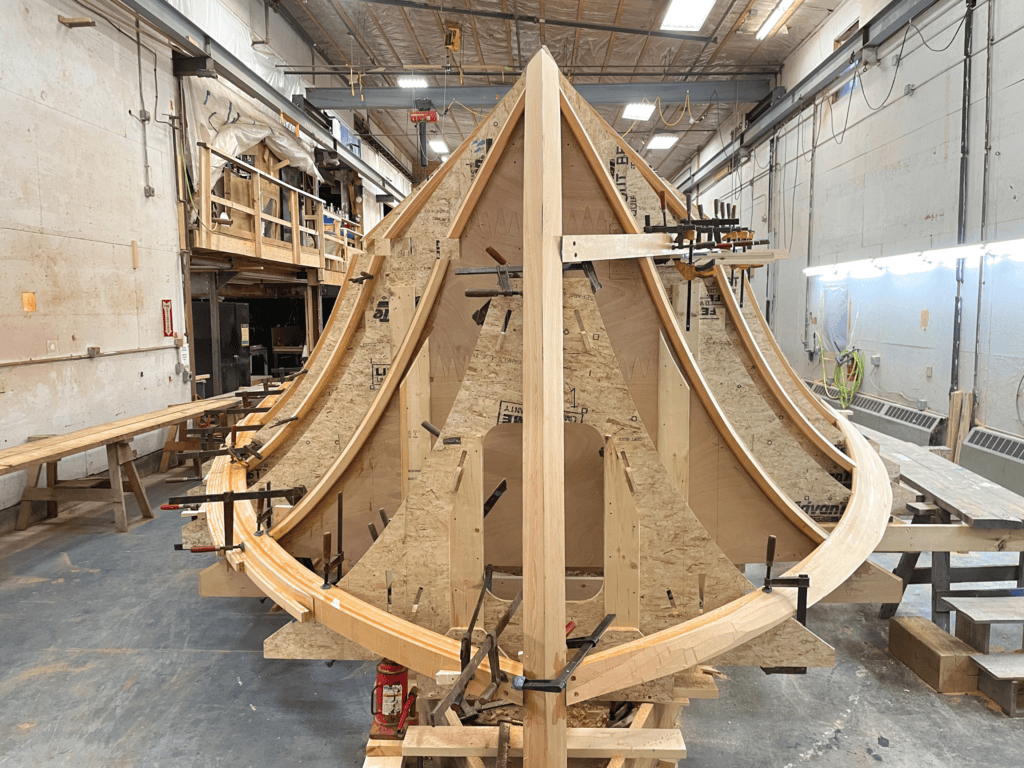
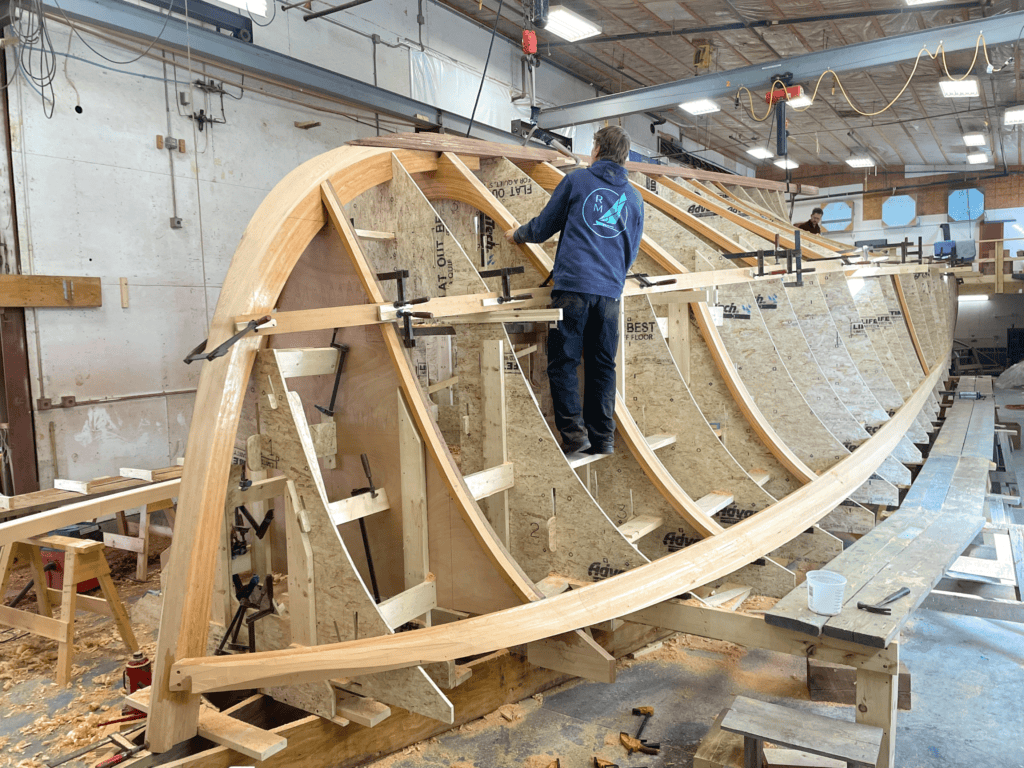
With the framework in place, the R51’s pronounced flare and shapely stern are already apparent. Even at roughly half the length of Ouzel, she makes a commanding presence in the shop.
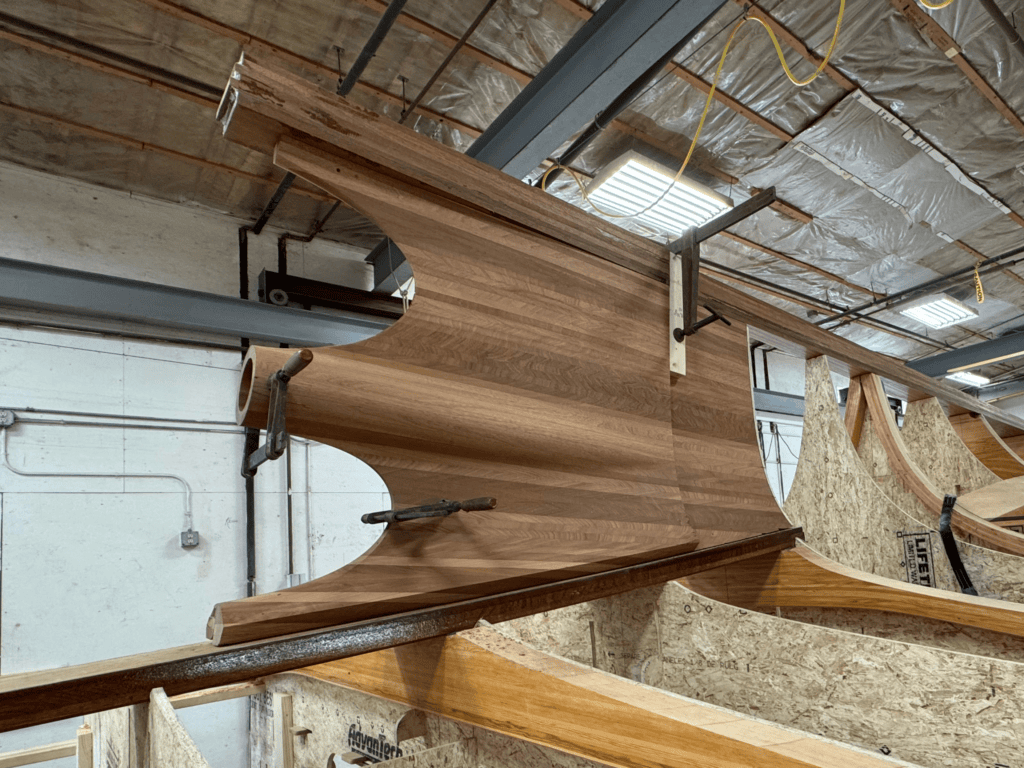
Stern Post
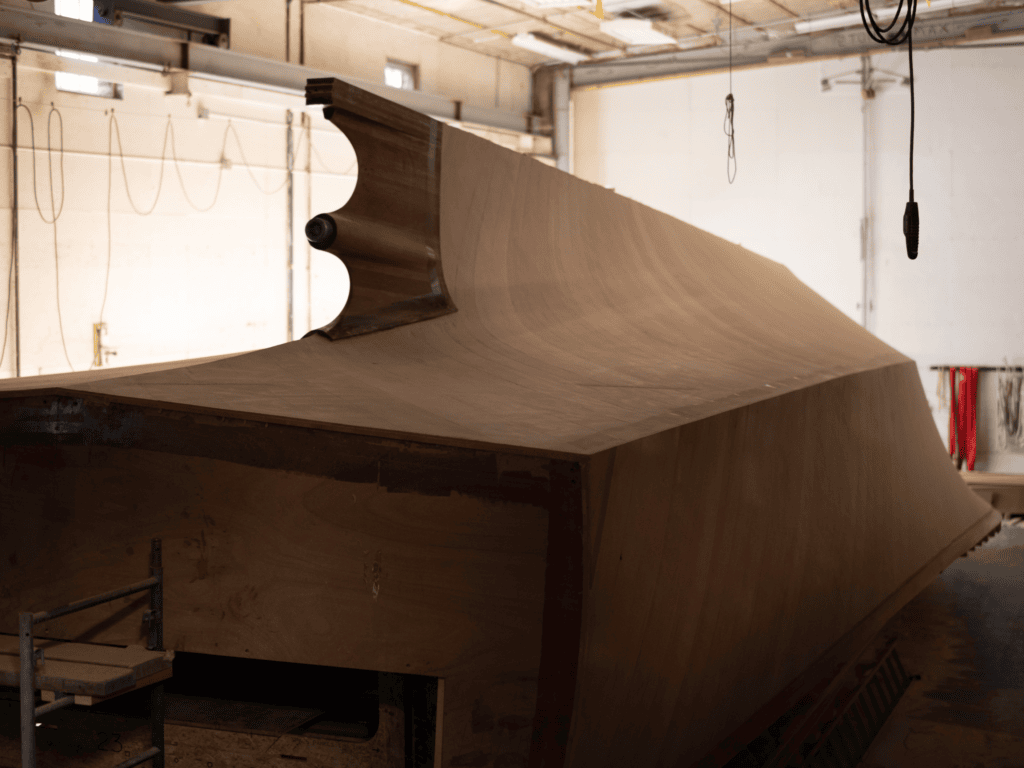
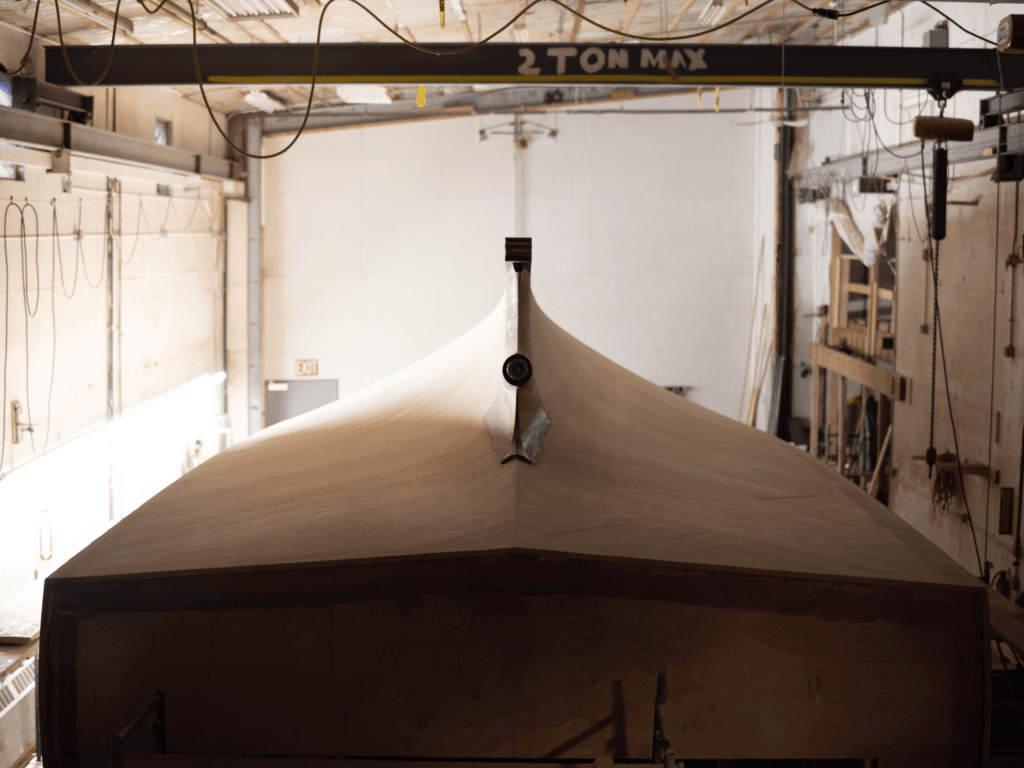
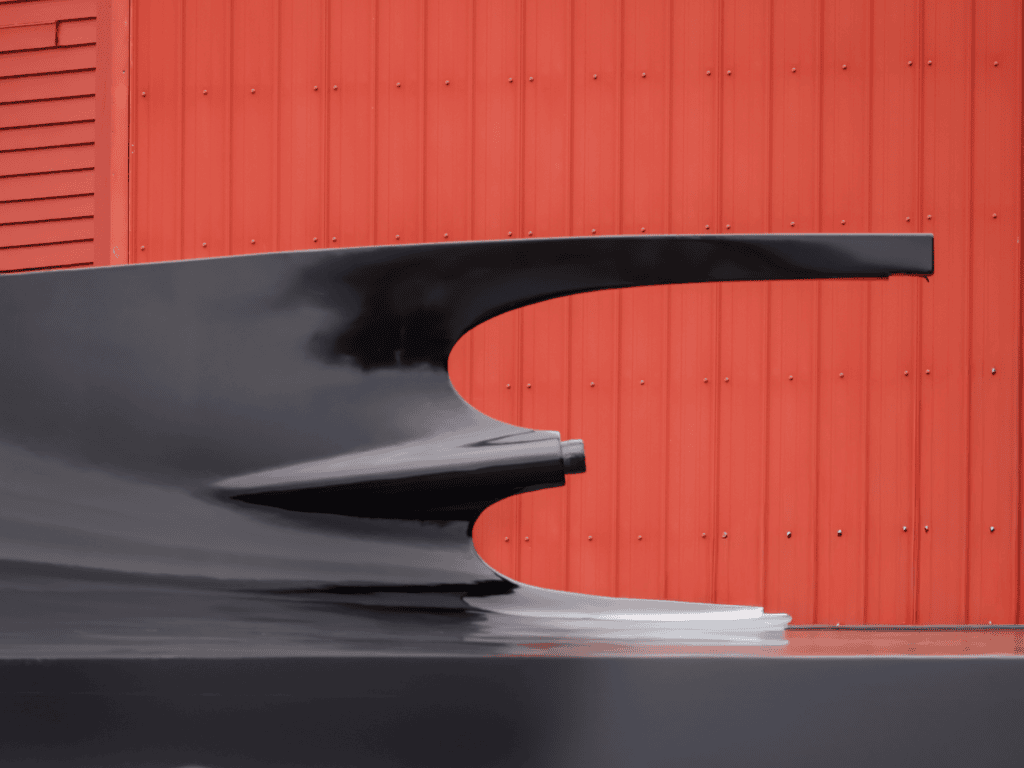
A closer look at the R51’s mahogany stern post, made by Moore Brothers in Bristol, Rhode Island.
Planking
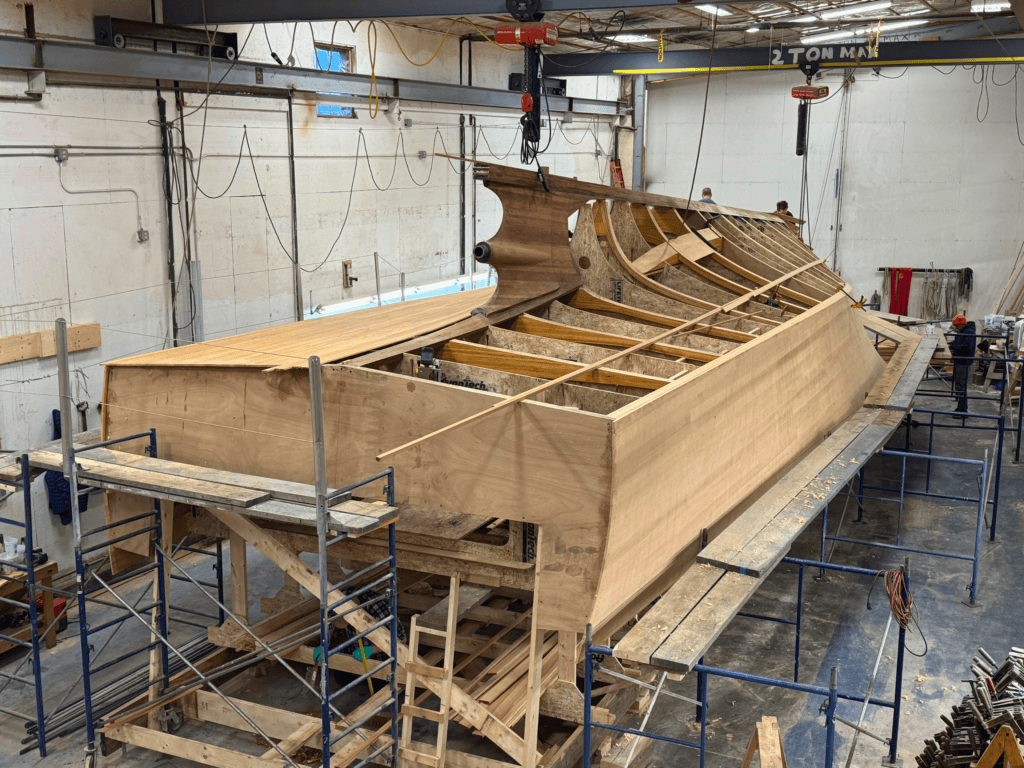
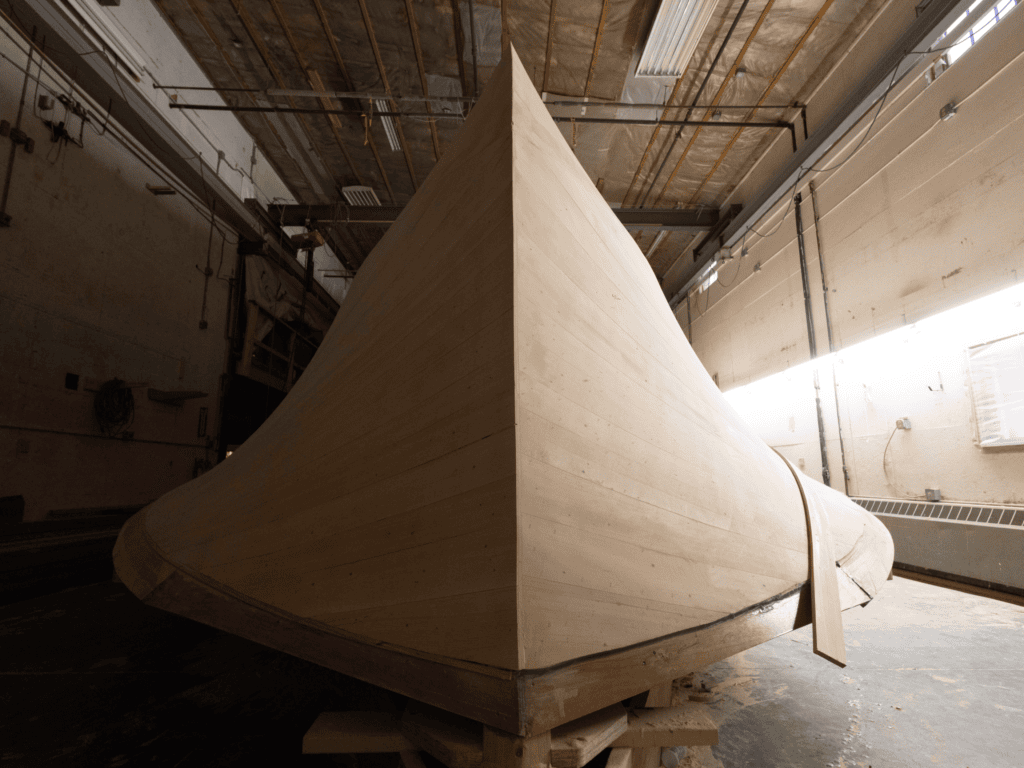
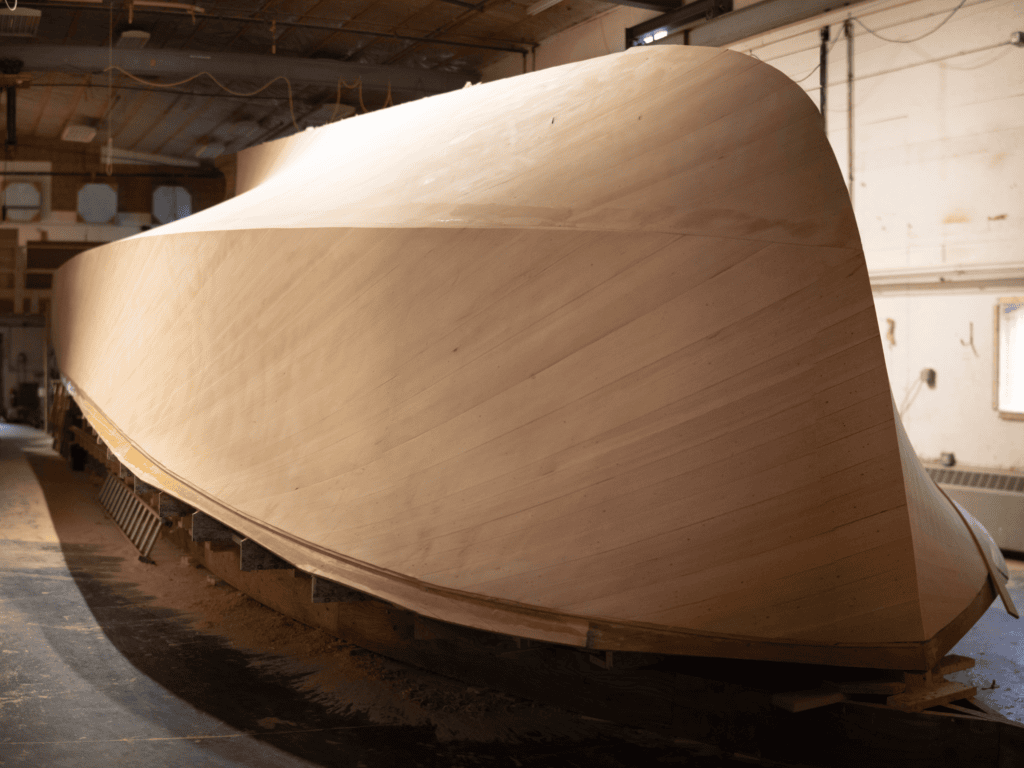
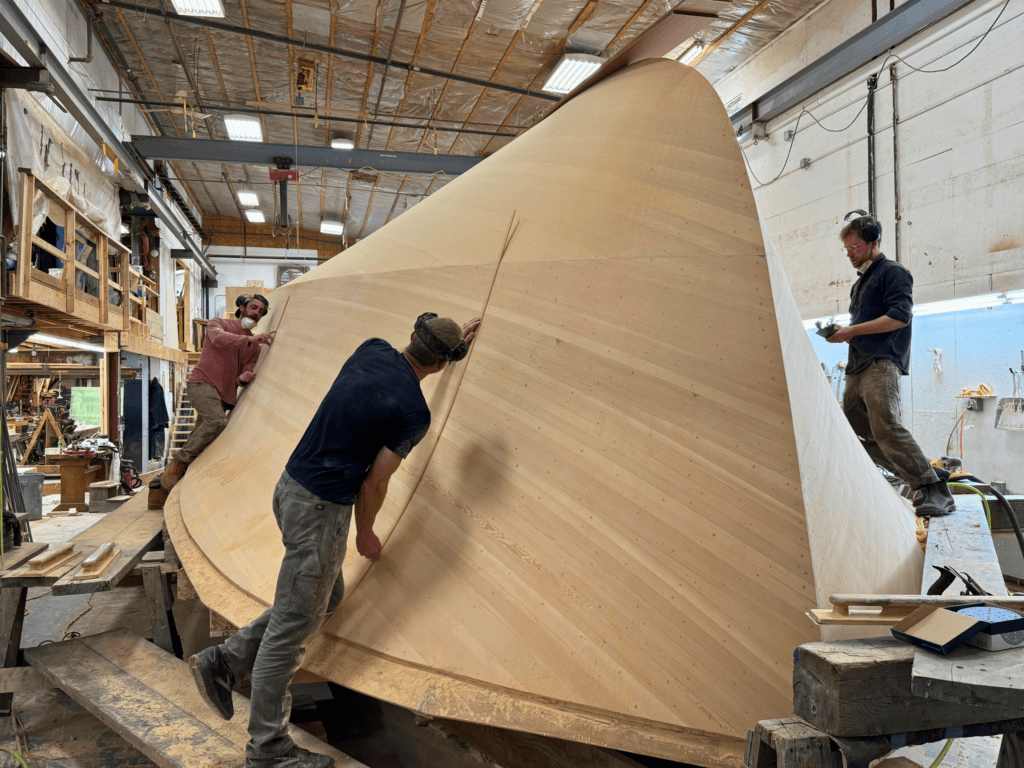
The R51’s hull is cold-molded in four layers of Douglas fir: a 15mm tongue-and-groove first layer, two 6mm diagonal layers laid in opposite directions, and a final 15mm longitudinal layer. The alternating orientations create a strong, balanced structure.
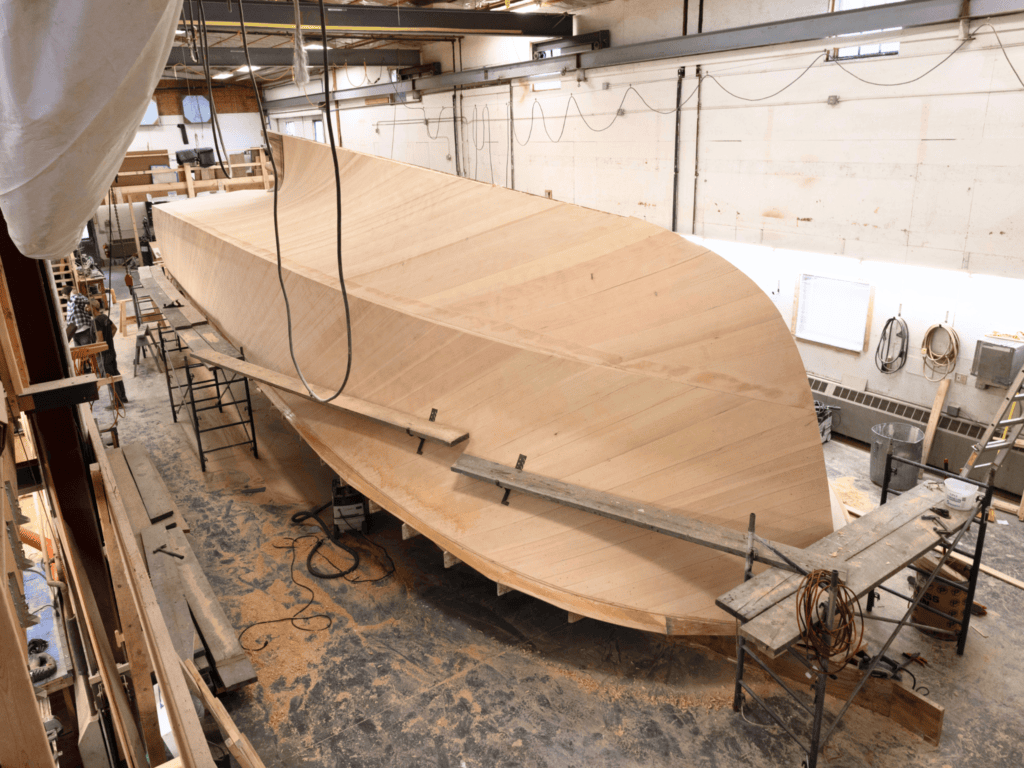
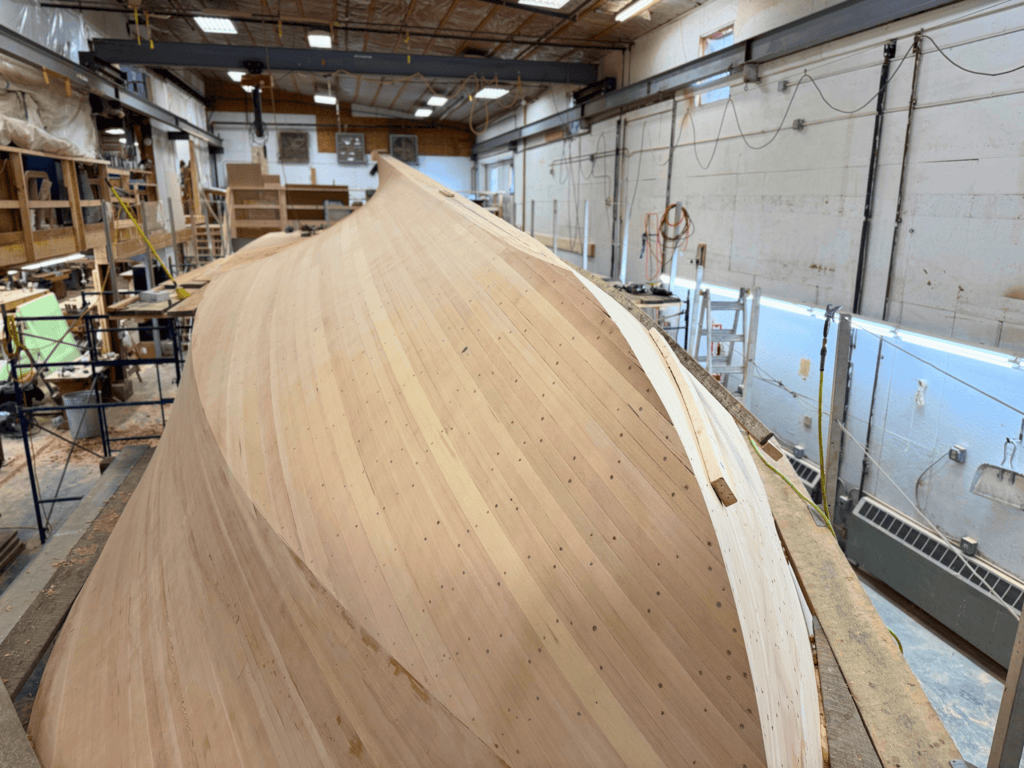
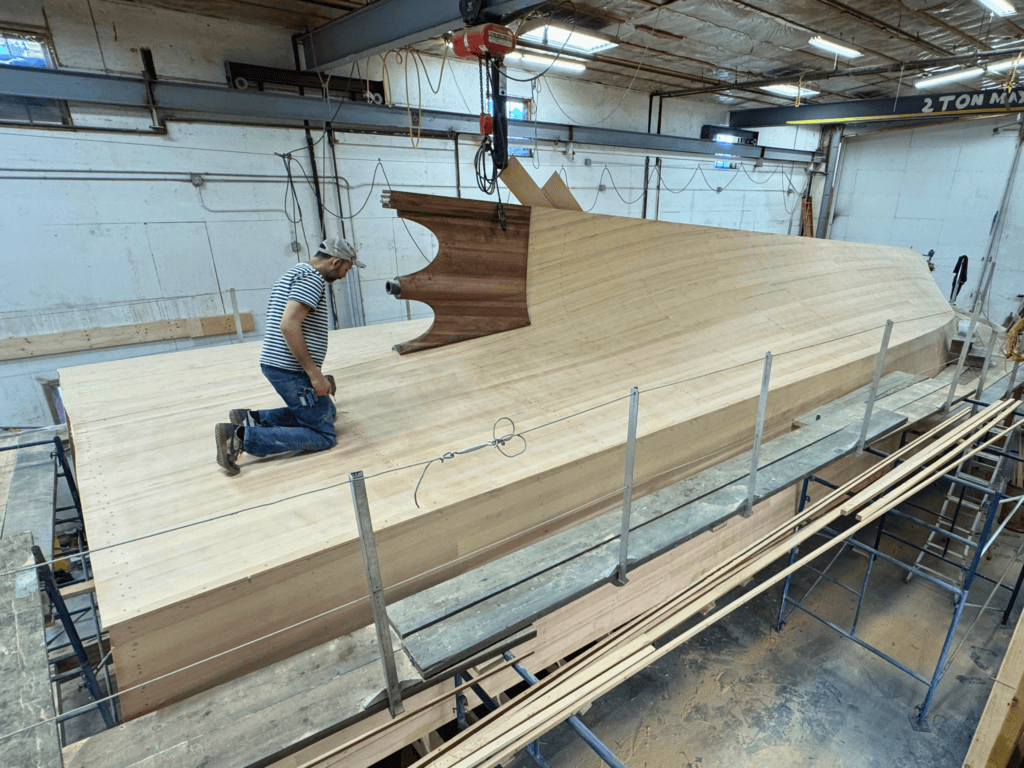
As the layers go on, light and shadow reveal the hard chine, semi-built-down bottom, and flare.
Fairing the Hull
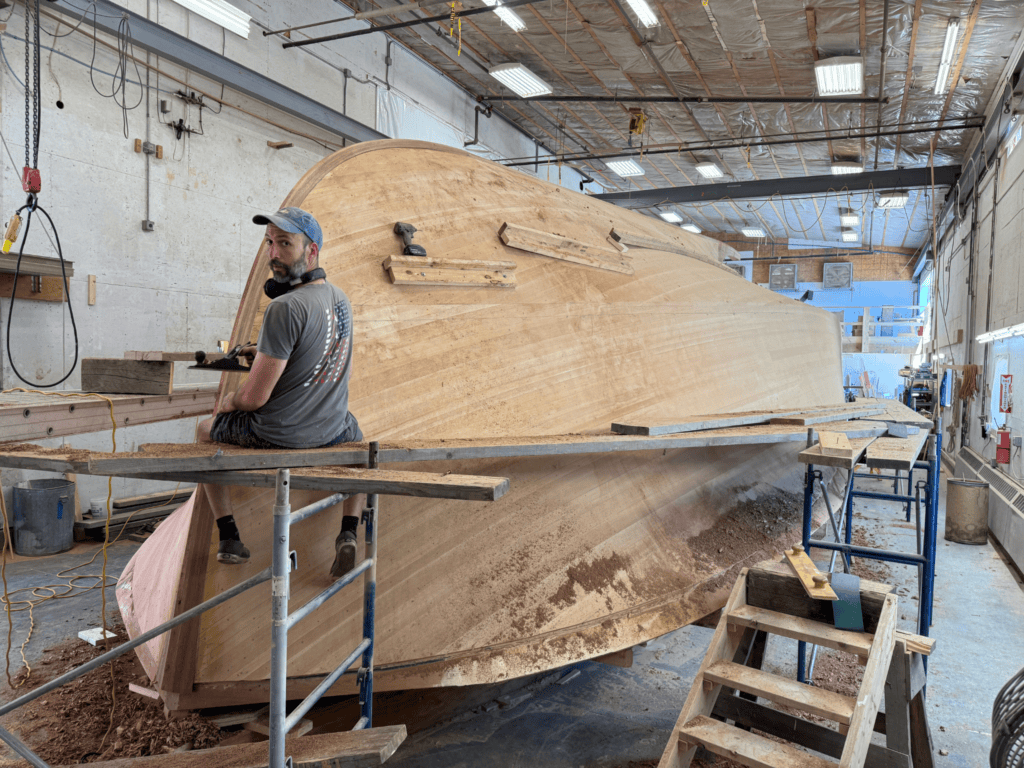
Before fiberglass, primers, and paint, we fair the wood. With the planking complete, the crew works the surface to produce the smooth, even hull that the final high-gloss finish will demand.
Post-Cure Sun
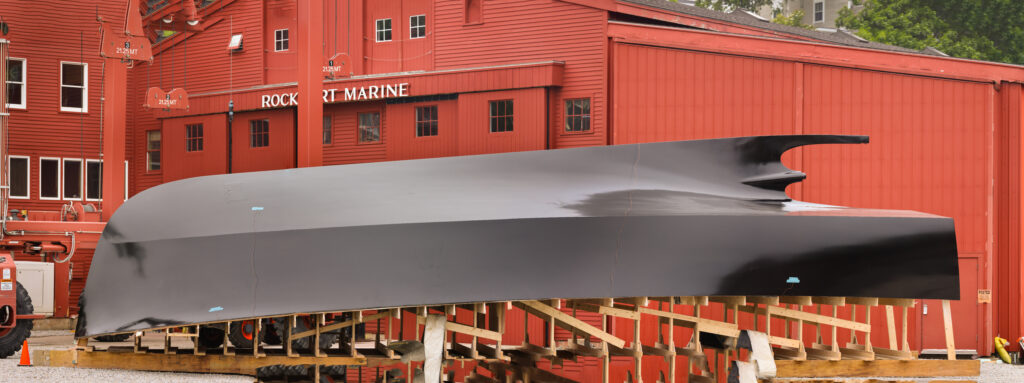
A temporary coat of black absorbs heat to help achieve the cosmetic post-cure before final finishing. The hull will ultimately be finished in high-gloss Alexseal over primers and fiberglass.
Another look at that mahogany stern post.
Rollover
The hull is turned upright in the travel lift through a slow, carefully controlled sequence.
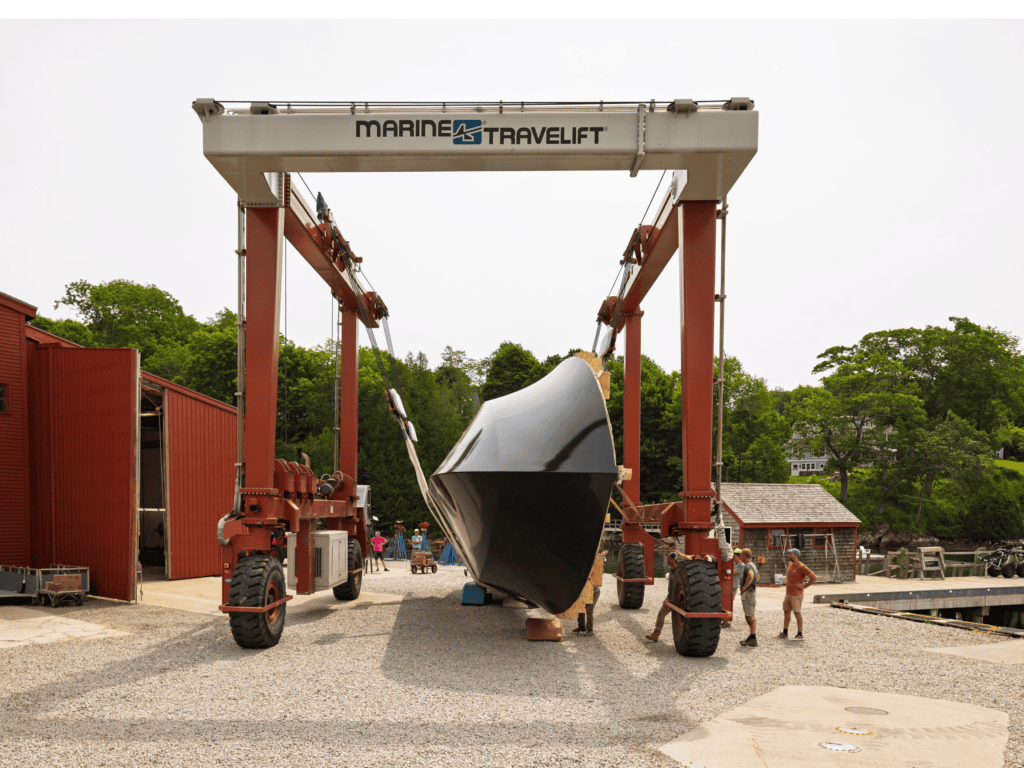
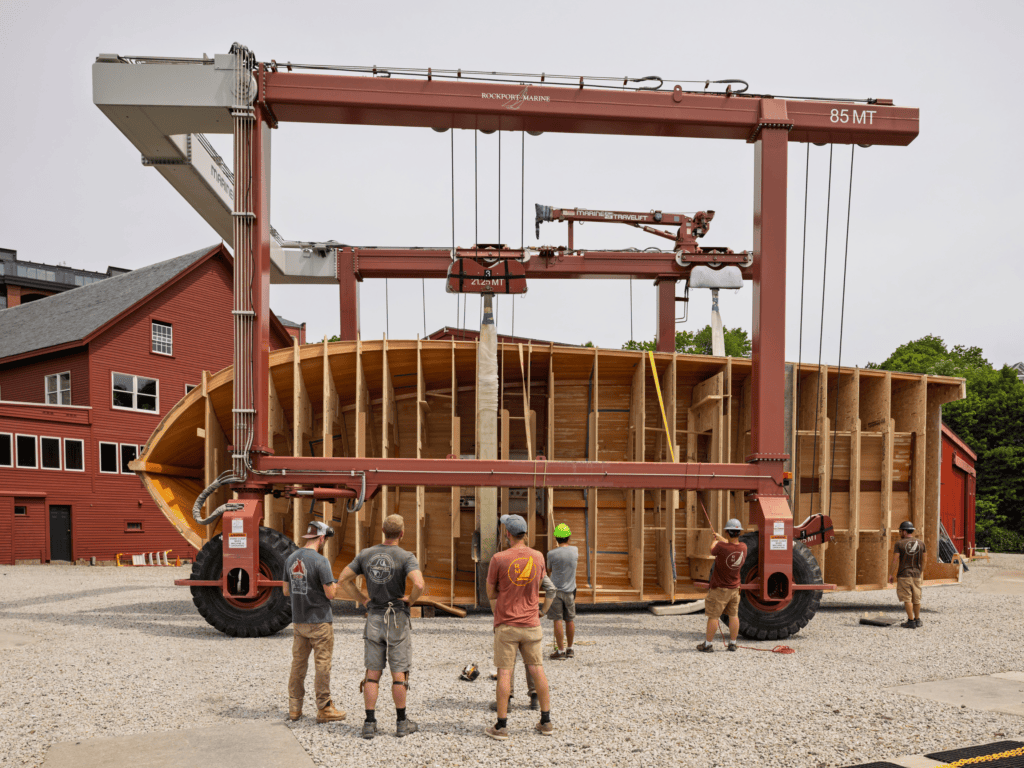
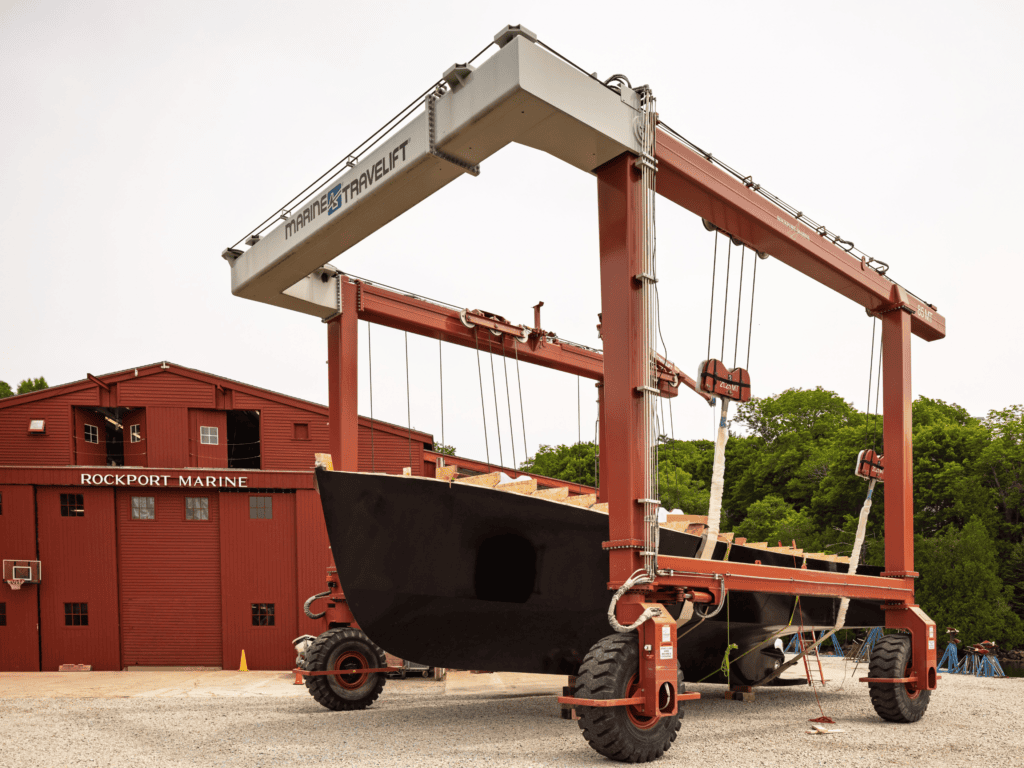
It is a familiar operation for the crew, but seeing a boat right way up for the first time never gets old.
Work Continues
Back in the shed, work turns to the interior. The framework and open spaces will give way to the accommodations, systems, and woodwork shown in the general arrangement.
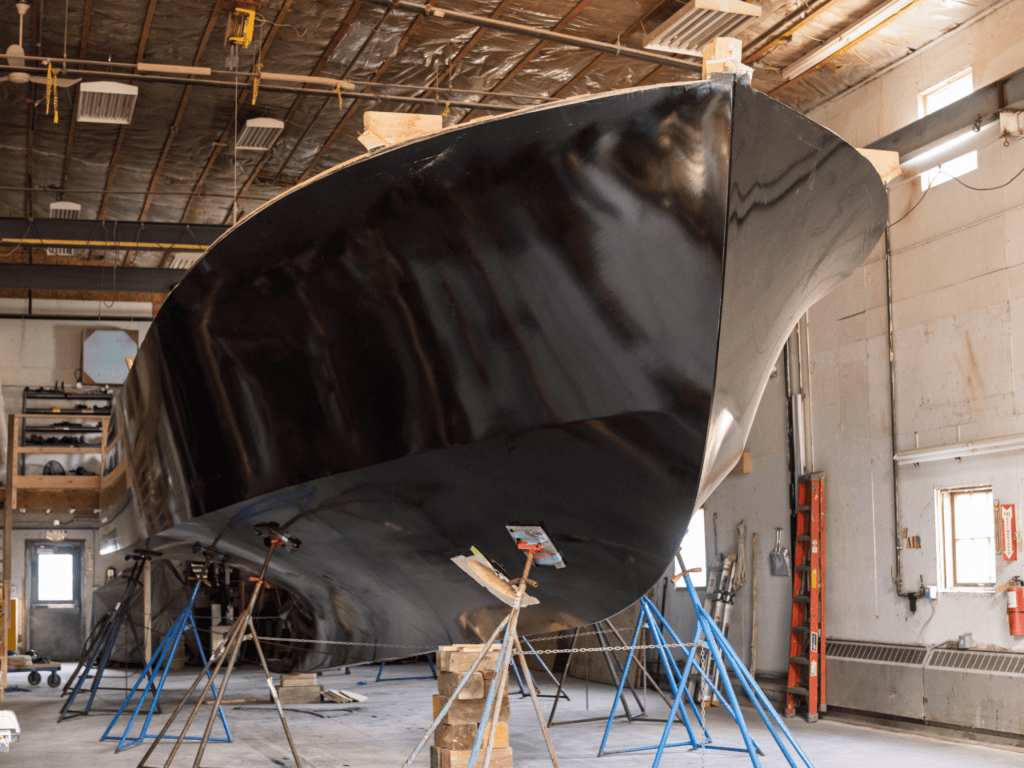
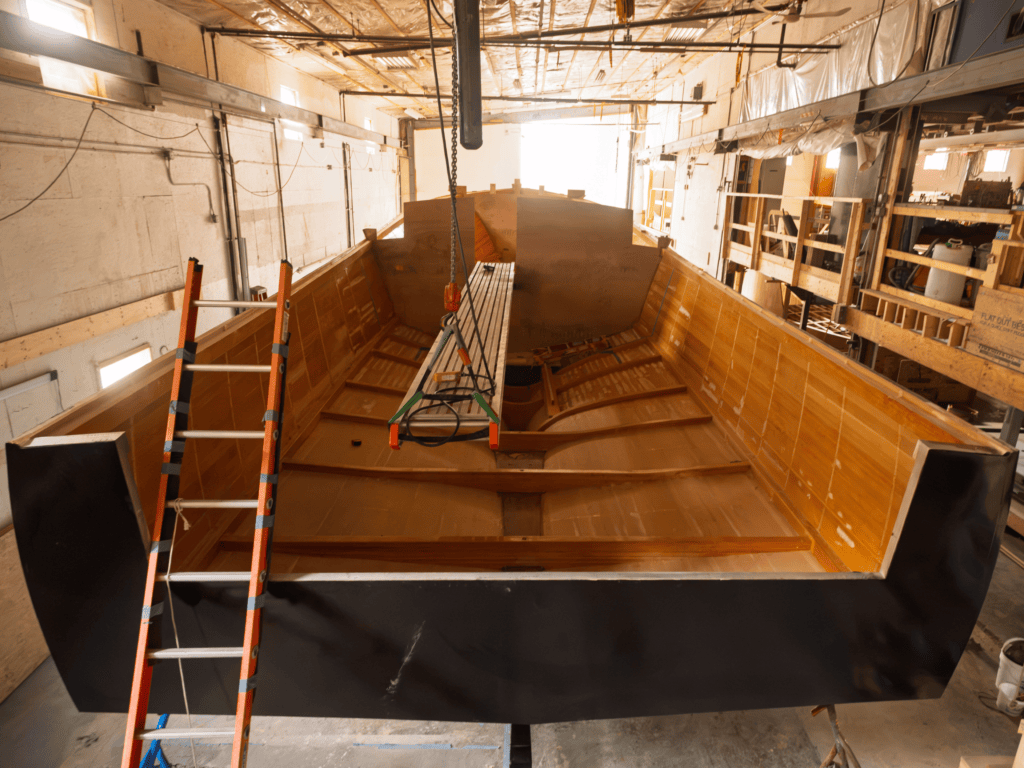
The R51’s completion is scheduled for early 2027.
For updates on this restoration and other projects, subscribe to the Rockport Marine quarterly newsletter or follow us on Facebook or Instagram.